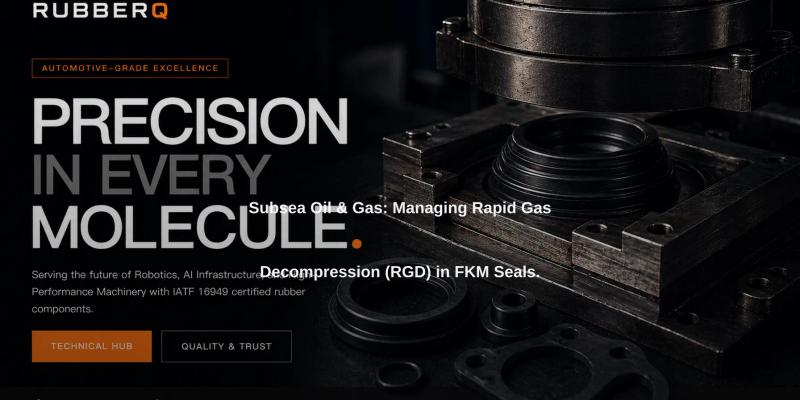
Subsea Oil & Gas: Managing Rapid Gas Decompression (RGD) in FKM Seals
Problem Statement
FKM seals in subsea oil and gas applications face rapid gas decompression (RGD) failures. High-pressure methane absorption followed by sudden decompression causes blistering, cracking, and seal failure. Traditional FKM grades degrade under these conditions.
Material Science Analysis
Standard FKM polymers fail due to insufficient gas permeability resistance. High fluorine content FKM (70%+ fluorine) reduces gas absorption. Crosslink density optimization minimizes compression set and enhances resistance to blistering. Specialized additives improve thermal stability and chemical resistance.
Technical Specs
- Shore A Hardness: 75 ± 5
- Tensile Strength: ≥ 20 MPa
- Elongation at Break: ≥ 150%
- Temperature Range: -20°C to 200°C
- Compression Set: ≤ 15% (22 hrs @ 200°C)
Material Comparison
| Parameter | High-Fluorine FKM | Standard FKM | HNBR |
|---|---|---|---|
| Gas Permeability | Low | Moderate | High |
| Compression Set (%) | ≤ 15 | ≤ 25 | ≤ 20 |
| Temperature Range (°C) | -20 to 200 | -20 to 175 | -40 to 150 |
| Chemical Resistance | Excellent | Good | Moderate |
Standard Compliance
RubberQ adheres to IATF 16949 standards for batch-to-batch consistency. Materials comply with ASTM D2000 for material callouts and ISO 3601 for sealing performance. Surface preparation and bonding processes meet ASTM D429 adhesion requirements.
CTA
For custom material compound development or IATF 16949 documentation, consult RubberQ's engineering department.