How IATF 16949 Standards Influence Rubber Component Quality for Robotics
How IATF 16949 Standards Influence Rubber Component Quality for Robotics
RubberQ Engineering
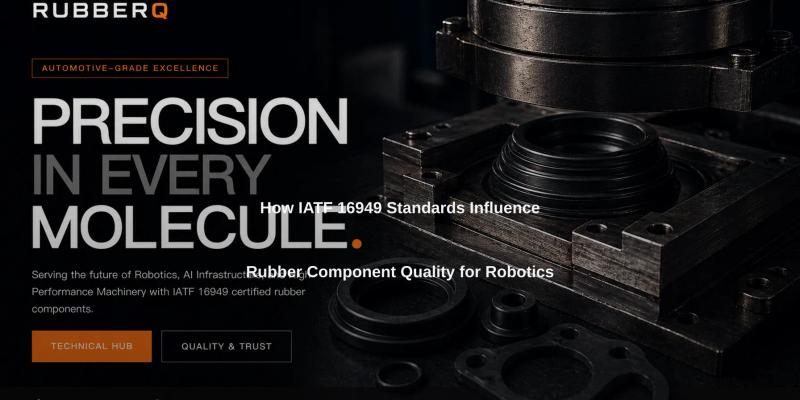
How IATF 16949 Standards Influence Rubber Component Quality for Robotics
Introduction
The IATF 16949 standard is a critical framework for ensuring quality in the automotive industry, including rubber components used in robotics. This standard emphasizes defect prevention, continuous improvement, and consistency in manufacturing processes. For robotics, rubber components such as seals and gaskets must meet stringent performance criteria, including temperature resistance, compression set, and chemical resistance. Compliance with IATF 16949 ensures that these components are manufactured to the highest quality standards, reducing failure rates and enhancing reliability.
Key Standards and Their Impact
In addition to IATF 16949, standards such as ASTM D2000 and ISO 3601 play a vital role in defining material properties and performance metrics. ASTM D2000 provides a classification system for rubber materials based on their physical and chemical properties, while ISO 3601 specifies dimensional and tolerance standards for O-rings. These standards collectively ensure that rubber components meet the rigorous demands of robotic applications.
Technical Parameters
Robotic applications often expose rubber components to extreme conditions. Key technical parameters include:
- Temperature Ranges: Rubber materials must operate reliably across a wide temperature spectrum, typically from -40°C to +150°C.
- Compression Set: A low compression set (≤20%) is essential to maintain sealing integrity over time.
- Chemical Resistance: Resistance to oils, acids, and solvents is critical for longevity in harsh environments.
Material Comparison
Below is a comparison of common rubber materials used in robotics, based on their compliance with ASTM D2000 and ISO 3601:
| Material | Temperature Range (°C) | Compression Set (%) | Chemical Resistance |
|---|---|---|---|
| Nitrile (NBR) | -40 to +120 | 15 | Excellent resistance to oils and fuels |
| Fluoroelastomer (FKM) | -20 to +200 | 10 | High resistance to acids and solvents |
| Silicone (VMQ) | -60 to +230 | 20 | Good resistance to water and steam |
| EPDM | -50 to +150 | 18 | Excellent resistance to weathering and ozone |
Conclusion
Adherence to IATF 16949, ASTM D2000, and ISO 3601 ensures that rubber components meet the demanding requirements of robotic applications. By focusing on technical parameters such as temperature ranges, compression set, and chemical resistance, manufacturers can deliver high-quality, reliable sealing solutions. Consult RubberQ engineering team for technical material selection.
Subscribe to Technical Updates
Receive new material insights and engineering case notes directly by email.