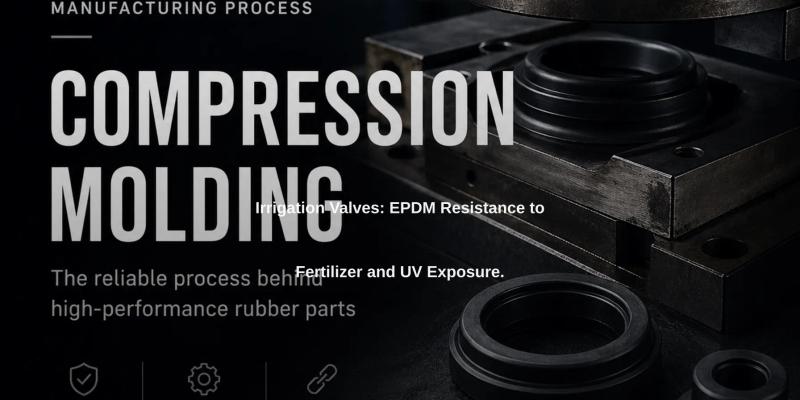
Irrigation Valves: EPDM Resistance to Fertilizer and UV Exposure
Problem Statement
Irrigation valves face severe chemical degradation from fertilizers and UV exposure. Standard elastomers fail due to swelling, cracking, and compression set failure.
Material Science Analysis
EPDM (Ethylene Propylene Diene Monomer) excels in this application due to its saturated polymer backbone. The absence of double bonds minimizes UV degradation. High ethylene content enhances chemical resistance to fertilizers and reduces swelling. Fluorine-free structure ensures cost-effectiveness compared to FKM.
Technical Specs
- Shore A Hardness: 70 ± 5
- Tensile Strength: 12 MPa
- Elongation at Break: 400%
- Temperature Range: -40°C to 120°C
- Compression Set (70 hrs @ 100°C): 20%
Material Comparison
| Property | EPDM | NBR | Silicone |
|---|---|---|---|
| Chemical Resistance (Fertilizer) | Excellent | Good | Poor |
| UV Resistance | Excellent | Fair | Good |
| Compression Set (%) | 20 | 35 | 15 |
| Temperature Range (°C) | -40 to 120 | -20 to 100 | -60 to 200 |
Standard Compliance
RubberQ adheres to IATF 16949 standards for batch-to-batch consistency. EPDM compounds comply with ASTM D2000 for material callouts and ISO 3601 for sealing performance.
CTA
For custom material compound development or IATF 16949 documentation, consult RubberQ's engineering department.